

What to Expect From a New Water Filter's First Water
You hooked up your new filter, opened the tap for the first time, and the water came out gray. Or cloudy. Or it carried a faint metallic edge that made you wonder if something was already wrong.
It almost certainly isn't. A new water filter needs a short break-in, and the first water through it is supposed to look and taste a little off. Flushing a new filter is like rinsing a new kitchen sponge before you wipe a counter. It works fine straight out of the package, but a quick rinse clears the loose bits first.
Here is the short version: run water through the new filter until it runs clear and tastes clean, which usually takes a few minutes to a couple of tank cycles depending on the system. Then it is ready to drink. Below is how to do that for each type of system, how long the break-in really lasts, and the one or two signs that mean you should stop and look closer.
Key Takeaways
Off-Looking Water Is Normal
Flush Until It Runs Clear
Gray Flecks Are Carbon Fines
Know the Line
Why Your New Filter Needs a Flush First
Three things show up in that first glass, and all three are expected.
The most common is carbon fines. Most filters use some form of activated carbon, and carbon arrives as a packed bed of granules or a pressed block. Cutting, packing, and shipping that media leaves behind a fine dust. Those gray or black flecks in the first pour are the filtration version of sawdust from a freshly cut board: a normal manufacturing leftover, not a contaminant. A short rinse carries them out. In a multi-stage system, that early flush does a second job too, because loose fines from the carbon stage can clog the cartridges that come after it if you never rinse them out.
The second is trapped air. A new cartridge and an empty housing are full of air. When water first pushes through, it picks up tiny bubbles and comes out milky or cloudy. Set a cloudy glass on the counter and watch it: if it clears from the bottom up within a minute or two, that was air, and flushing clears it for good.
The third shows up mostly on reverse osmosis systems and certain specialty media. A reverse osmosis membrane (the thin sheet that does the fine filtering) ships with a food-safe preservative that keeps it from drying out or growing anything on the shelf. The first batches of water rinse that preservative away, which is exactly why a brand new RO system can taste flat or slightly chemical until you cycle it a few times.
After more than 30 years building multi-stage systems, this is the first thing our technicians tell a new owner: the break-in is the system working as designed, not a warning sign.
How to Flush a New Water Filter, by Type
The principle is the same for every system. Run water through until it is clear, steady, and clean-tasting. The method and timing change with the format. Here is the universal version first, then the specifics.
-
Start with cold water only
Hot water can soften and damage carbon media, so flush and break in the system on the cold tap.
-
Run or cycle the system at full flow
For inline and whole-house filters, run a cold tap. For reverse osmosis and any system with a storage tank, fill the tank and drain it completely.
-
Flush until the water runs clear and tastes clean
Watch the water improve with each minute or each tank. Discoloration and cloudiness should fade as you go.
-
Give it 24 to 48 hours to settle
Any leftover haze, faint taste, or stray flecks should disappear over the first day or two of normal use.
Under-Sink and Countertop Carbon Filters
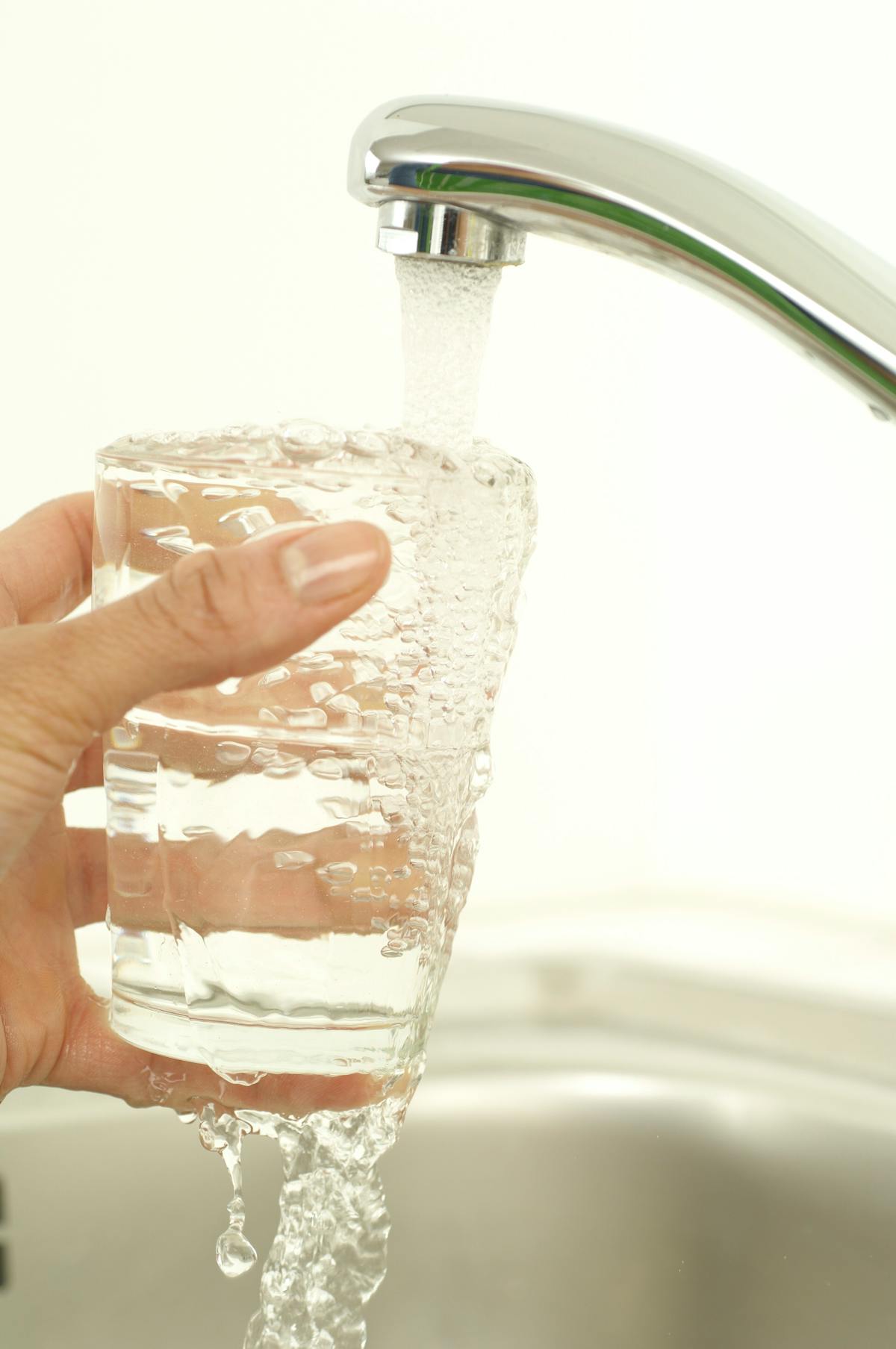
Open the dedicated filter faucet (or the cold tap the system feeds) and let it run at full flow for 10 to 15 minutes. You will likely see discoloration in the first minute, then it clears. If the system has more than one cartridge, that flush rinses each stage in sequence.
Whole-House Systems
A point-of-entry system treats every tap in the home, so flush it from a nearby cold tap (a utility sink or tub spout works well) for about 10 to 15 minutes. Run cold water only. If the system includes Eagle Redox Alloy (ERA) media, the Crystal Quest version of KDF, the first water may carry a faint metallic note as the copper-zinc media wakes up. That settles out as you flush.
Reverse Osmosis Systems
Reverse osmosis (RO) systems need cycling, not just a timed run, because they fill a storage tank. Open the RO faucet and let the system drain the first full tank completely, then let it refill and drain again. Two to three full fill-and-drain cycles rinse out the membrane preservative and the carbon fines from the pre- and post-filters. The first tank fills slowly, so this part takes patience rather than effort.
Pitcher Filters
A Crystal Quest 5-stage pitcher filter is the simplest case. Fill the reservoir, let it drain through the filter completely, and discard that water. Do that 2 or 3 times before your first real pour. The first fills may taste faintly dusty as the carbon settles in, and that fades quickly.
Refrigerator and Inline Filters
Most refrigerator and inline filters want 3 to 5 gallons run through before you drink. Dispense water (and ice, then discard the first batch) until it runs clear and the taste is clean.
| System type | How to flush | Typical flush |
|---|---|---|
| Under-sink / countertop carbon | Run the filtered tap at full flow | 10 to 15 minutes |
| Whole-house (point-of-entry) | Run a nearby cold tap | 10 to 15 minutes |
| Reverse osmosis | Fill and drain the storage tank | 2 to 3 full cycles |
| Pitcher (5-stage) | Fill, drain, discard | 2 to 3 reservoirs |
| Refrigerator / inline | Dispense and discard | 3 to 5 gallons |
Flush with cold water only. Hot water can soften and damage carbon media, so save the hot tap until the system is fully broken in.
What's Normal in the First 24 to 48 Hours
Even after the initial flush, a new system settles in over a day or two. Here is what falls inside the normal range.
Discoloration that fades. Gray or black flecks can reappear briefly the first few times you draw water, and systems that use iron-reduction or other oxidizing media may shed a light rust-colored tint at first. That tint is fine media dust washing out, not anything the filter has pulled from your water. Each draw should be cleaner than the last, and by the end of the first day it should be clear.
Mild cloudiness. Air works its way out of the lines and housings over several uses. A glass that clears as it sits is still just air.
A faint taste or odor. New plumbing fittings, a fresh tank, and waking-up media can all leave a temporary taste. On RO systems the water can taste flat at first because the membrane is rinsing clean and the system has not yet stored a full, settled tank.
The pattern that tells you everything is direction. Normal break-in always trends toward clear and clean with each use. You are watching a system improve, not hold steady at "off."
When It's Not Normal: Signs of a Real Problem
Break-in has a finish line. If you cross it and the issue is still there, it is worth a closer look rather than more flushing. Treat these as your line:
- Discoloration that persists after a thorough flush and a full day of normal use.
- A sulfur or rotten-egg smell that won't clear, which usually points to the water source rather than the new filter.
- Cloudiness that doesn't settle when a glass sits still, especially if it clears from the top down instead of the bottom up.
- Low or dropping water flow once the system is fully flushed and any air is gone.
- Any leak at a housing, fitting, or the faucet.
When you hit one of these, the fix is usually simple, but it is a diagnostic question, not a flushing question. Our water filter troubleshooting guide walks through the common causes by symptom. For RO-specific issues, the reverse osmosis troubleshooting guide covers low output, taste, and pressure, and our guide to cloudy RO water covers haze that won't clear.
Sanitize a Storage Tank Before You Install It
If your system has a storage tank, give it a quick sanitizing rinse before the first fill, especially if it sat in storage for a while. A tank that goes into service without that step can leave a stale or plastic taste in the water for days, and it is far easier to handle before the tank is plumbed in than after.
A simple sanitizing rinse with a diluted, food-safe sanitizing solution, followed by a clean-water rinse, is enough for most residential tanks. Follow your system's instructions for the exact method, and if you aren't sure, this is a good moment to ask. It is a small step that prevents the most common "my new water tastes funny" call we get.

A new filter that runs a little off at first is doing exactly what it should.
Flush it with cold water until it runs clear, give it a day to settle, and you are set. If your water still isn't right after a proper break-in, our water specialists can walk you through startup or help you pin down anything that seems off. Since 1994, Crystal Quest has built and supported these systems for residential, commercial, and industrial customers.
For the long run, our filter replacement guide keeps the system performing the way it did on day one.
Frequently Asked Questions About Flushing a New Water Filter
How long should I flush a new water filter?
Most carbon and whole-house systems flush clear in 10 to 15 minutes of running water. Reverse osmosis systems need 2 to 3 full fill-and-drain cycles of the storage tank, and refrigerator filters usually want 3 to 5 gallons run through. Flush until the water is clear, steady, and tastes clean, then it is ready.
Is it safe to drink water from a new filter before flushing it?
It is better to flush first. The carbon fines and trapped air in that first water aren't dangerous, but they can taste dusty or look cloudy, and the point of flushing is to clear them so your first real glass is clean. On reverse osmosis systems, flushing also rinses out the membrane's shipping preservative.
Why is my new water filter giving me black or gray water?
Those flecks are carbon fines, fine particles of activated carbon left over from manufacturing and shipping. They are harmless and they rinse out within the first few minutes of flushing. If black particles keep appearing long after a thorough flush, that is worth troubleshooting rather than ignoring.
How long does the break-in period last?
Plan on the first 24 to 48 hours. The initial flush handles most of it in minutes, and any remaining cloudiness, faint taste, or stray discoloration should fade with each use over the first day or two. The key sign is direction: it should keep getting clearer and cleaner, never worse.
Why does my new reverse osmosis system taste bad at first?
A new RO membrane ships with a food-safe preservative, and the system has not yet stored a full, settled tank. The first water can taste flat or slightly chemical until you run 2 to 3 full fill-and-drain cycles. After that, the taste should be clean and consistent.
Do I need to flush a new refrigerator water filter?
Yes. Run 3 to 5 gallons through it, and discard the first batch of ice, before drinking. New refrigerator filters shed carbon fines just like any other carbon filter, and flushing clears them along with any trapped air in the line.


