

Find PFAS Contamination by Location or Zip Code Check Local PFAS Contamination Levels Instantly
Interactive MapEnter your zip code to instantly see PFAS contamination levels in your area, including military sites, industrial contamination, and EPA testing data.
Finding PFAS contamination data...

PFAS Contamination in the U.S.
Above MCL (3,931)
Drinking Water
Below MCL (5,139)
Drinking Water
Military (601)
Other Known (57)
Above EPA MCL
Below EPA MCL
Military Sites
Other Known
PFAS Contamination Results
Nearest Site
--
miles away
Max PFAS Level
--
ppt
Sites Within 25 mi
--
contamination sites
Risk Level
--
--
Our Recommendation
Based on your area's PFAS contamination level...
What's Next?
How to Check PFAS Contamination in Your Area
PFAS, also known as "forever chemicals," are man-made compounds that never break down in the environment or the human body. Find local PFAS contamination levels in seconds using our interactive map.
1
Enter Your Zip Code
Type your 5-digit zip code into the search box above, or click "Use My Location" to automatically detect your area using GPS.
2
View PFAS Contamination Data
See PFAS contamination levels in parts per trillion (ppt), site types, primary contaminants, and a color-coded risk classification for your area.
3
Get Filtration Solutions
Based on your PFAS level, we'll recommend the right filtration solution—from PFAS water filters to whole house systems—sized for your home.
Most PFAS-Contaminated Regions in the U.S.
Some areas have extreme PFAS contamination from military bases, industrial manufacturing, and chemical plants. Here are the regions with the highest PFAS levels detected.
States With Most PFAS Sites
-
1 New York 1,428 known contamination sites1,428 sites
-
2 Massachusetts 993 known contamination sites993 sites
-
3 New Jersey 807 known contamination sites807 sites
-
4 Texas 628 known contamination sites628 sites
-
5 Michigan 508 known contamination sites508 sites
Most Contaminated Sites
-
1 England AFB LA — Military20,700,000 ppt
-
2 NAWS China Lake CA — Military8,000,000 ppt
-
3 Patrick AFB FL — Military4,338,000 ppt
-
4 Myrtle Beach AFB SC — Military2,640,000 ppt
-
5 Pearl Harbor JB HI — Military2,620,000 ppt
The EPA set the Maximum Contaminant Level (MCL) for PFOA and PFOS at 4 parts per trillion (ppt) in 2024. Any detection above this level warrants filtration. Find the right PFAS filter for your home.
Understanding PFAS Contamination Levels
PFAS in drinking water is measured in parts per trillion (ppt). The EPA set the Maximum Contaminant Level (MCL) at 4 ppt for PFOA and PFOS in April 2024 -- the enforceable legal limit for public water systems.
Non-Detect
0 ppt
Minimal Risk
Trace
1 - 4 ppt
Low Risk
Detected
4 - 10 ppt
Moderate Risk
High
10 - 50 ppt
High Risk
Very High
50+ ppt
Critical Risk
PFAS Contamination Reference Chart
| Classification | PPT Range | EPA MCL Status | Risk Level | Action |
|---|---|---|---|---|
| Non-Detect | 0 ppt | Below MCL | Minimal | No treatment needed |
| Trace | 1 - 4 ppt | At / Near MCL | Low | Monitor levels |
| Detected | 4 - 10 ppt | Above MCL | Moderate | Filtration recommended |
| High | 10 - 50 ppt | Well Above MCL | High | Filtration strongly recommended |
| Very High | 50+ ppt | Far Above MCL | Critical | Immediate filtration essential |
Health Effects of PFAS Exposure
PFAS are "forever chemicals" that accumulate in the body over time. Research links prolonged exposure to serious health conditions affecting nearly every organ system.


What This Means for You
Understanding your PFAS exposure risk helps you make informed decisions about water filtration for your home.
Map Data vs. Testing
Our map shows known contamination sites and regional data. For precise readings at your address, testing is essential -- especially for private wells. PFAS cannot be detected by taste, smell, or appearance. Learn about common signs of PFAS in tap water and why lab testing matters.
Municipal water users can check their annual Consumer Confidence Report (CCR) from their water utility for reported PFAS levels.
When to Take Action
Above 4 ppt (EPA MCL): Any detection of PFOA or PFOS above 4 parts per trillion exceeds the EPA's Maximum Contaminant Level. Filtration is warranted -- see our PFAS filtration guide to compare your options.
Above 20 ppt: Filtration is strongly recommended. At this level, PFAS accumulation in the body accelerates significantly over time. Reverse osmosis and nanofiltration are among the most effective treatment methods.
Above 50 ppt: Immediate action is advised. Consider a whole house PFAS filtration system for comprehensive protection.
Your PFAS Solution
PFAS Filtration Systems
Crystal Quest offers proven PFAS removal solutions for every home. Reverse osmosis removes 95-99% of all PFAS compounds.

Whole House Reverse Osmosis System
Complete home protection. Removes 95-99% of PFAS from every tap, shower, and appliance.
- 95-99% PFAS removal
- Whole-house protection
- Made in USA

Under Sink Reverse Osmosis System
Point-of-use protection for your kitchen. Removes 95%+ of PFAS from drinking and cooking water.
- 95%+ PFAS removal
- Kitchen tap protection
- Easy installation
Frequently Asked Questions
Everything you need to know about PFAS contamination and what it means for your drinking water.
PFAS (per- and polyfluoroalkyl substances) are a group of 12,000+ synthetic chemicals used since the 1950s in products like nonstick cookware, stain-resistant fabrics, and firefighting foam. They are called "forever chemicals" because they don't break down in the environment or the human body. Their carbon-fluorine bonds are among the strongest in organic chemistry, making them virtually indestructible. Learn more about how PFAS end up in drinking water and why they persist.
PFAS enter water supplies through industrial discharge from manufacturing plants, military bases using AFFF firefighting foam, landfills leaching PFAS from discarded consumer products, and agricultural runoff from biosolids applied as fertilizer. PFAS can travel long distances through groundwater, contaminating wells and municipal water sources miles from the original source.
In April 2024, the EPA finalized enforceable Maximum Contaminant Levels (MCLs) for several PFAS compounds -- one of the strictest drinking water standards ever established:
PFOA: 4 parts per trillion (ppt)
PFOS: 4 parts per trillion (ppt)
PFHxS: 10 parts per trillion (ppt)
PFNA: 10 parts per trillion (ppt)
A Hazard Index of 1 also applies to mixtures of PFHxS, PFNA, PFBS, and GenX. For context, 4 ppt is equivalent to about 4 drops of water in 20 Olympic-sized swimming pools. These are the legally enforceable limits for public water systems nationwide.
There is no known safe level of PFAS exposure. Unlike many contaminants that the body can process and eliminate quickly, PFAS accumulate over time through a process called bioaccumulation. The half-life of PFOS in the human body is approximately 5 years, meaning it takes that long for your body to eliminate just half of what it has absorbed.
Even trace amounts below the EPA MCL contribute to your total body burden. Many health experts recommend minimizing PFAS exposure as much as possible, regardless of whether your water meets the legal standard. Learn more about the health risks of PFAS in tap water.
Standard water filters like pitcher filters and basic faucet attachments cannot remove PFAS. The following specialized technologies are proven to reduce PFAS levels effectively:
Reverse osmosis (RO) -- forces water through a semi-permeable membrane, removing up to 99% of PFAS compounds. Ideal for point-of-use drinking water treatment.
Activated carbon filtration -- granular activated carbon (GAC) with PFAS-rated media adsorbs PFAS compounds. Effective for both point-of-use and whole-house systems.
Nanofiltration -- membrane filtration that targets PFAS along with other contaminants, offering an alternative to RO with less water waste.
For help choosing the right approach, read our PFAS filtration guide or browse PFAS water filters from Crystal Quest.
If you live near a military base, airport, industrial facility, landfill, or in an area with known contamination, testing is strongly recommended. PFAS does not affect the taste, smell, or appearance of water -- only laboratory testing can detect it. Crystal Quest offers professional water testing that can identify PFAS compounds at levels well below the EPA MCL.
Protect Your Family from PFAS Contamination
Now that you know your PFAS risk level, take action. Crystal Quest PFAS filtration systems provide certified protection for your home's water supply.
- Made in USA
- Lifetime Support
- Free Shipping
Data sourced from EPA UCMR 5, SDWIS, and Department of Defense testing reports. Contamination levels represent a single point in time and may not reflect current conditions. All locations are approximate. For precise results, we recommend professional water testing.
Learn More About PFAS Contamination
Explore our guides and resources to understand PFAS, health risks, treatment options, and how to protect your family.
Guide: invalid url input)
Read Article
Filtration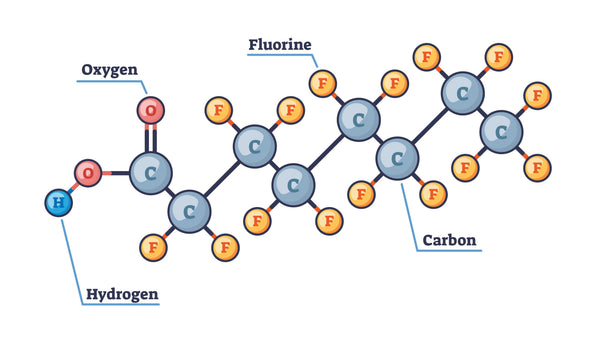
PFAS Water Filter Guide: How to Remove Forever Chemicals from Your Water
Three filtration technologies can reduce PFAS by 90% or more. This guide covers which PFAS water filters work, which ...
Read Article
Education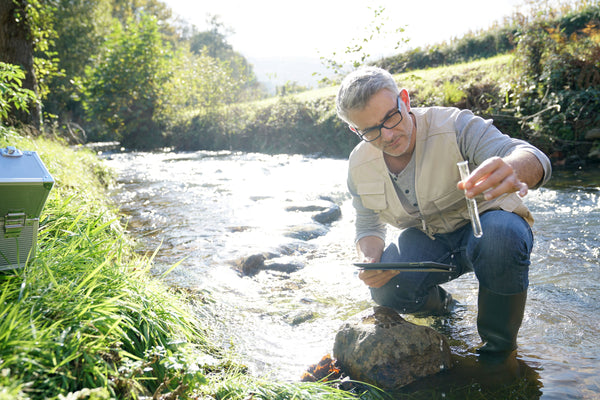
How to Detect PFAS in Tap Water: 5 Warning Signs You're at Risk
PFAS can't be seen, smelled, or tasted. Learn the five risk factors that suggest PFAS contamination and exactly how t...
Read Article