
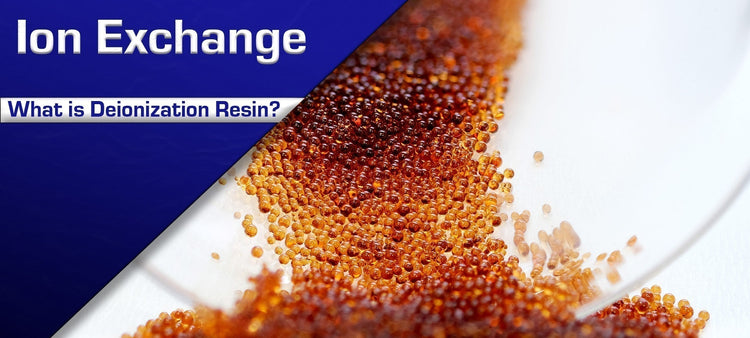
Why DI Resin Matters: The Science Behind Ultra-Pure Water
Did you know that the purest deionized (DI) water on earth can reach a resistivity of 18.2 megaohms, so clean it barely conducts electricity at all? For comparison, the water coming out of your tap usually measures only a few hundred to a few thousand microsiemens per centimeter, depending on where you live. That gap is massive, and it highlights why industries from laboratories to power plants rely on a special material called deionizing resin (DI resin) to strip out dissolved salts and minerals that most filters can’t touch.
Unlike a simple carbon filter or a water softener, DI resin doesn’t just trap contaminants, it exchanges charged ions in the water for hydrogen (H⁺) and hydroxide (OH⁻), which then combine to form pure H₂O. This process is called ion exchange, and results in water that is free of the invisible ions that cause spotting, scaling, corrosion, and measurement errors in sensitive processes.
In this guide, we’ll cover:
- What DI resin is and how it works (without the heavy jargon).
- The difference between cation, anion, and mixed-bed resins.
- How DI resin compares to reverse osmosis and water softening.
- Real-world applications, from reef aquariums to semiconductor fabs.
- Tips for choosing, monitoring, and replacing DI resin to get the best performance.
Whether you’re researching for a lab, an industrial facility, a home aquarium, or even out of sheer curiosity, this article will guide you towards a complete understanding of what DI resin is, how it works, and why it matters.
Key Takeaways at a Glance
DI removes dissolved ions
Eliminates mineral ions that cause spots, scale, corrosion, and instrument errors.
RO + DI delivers best value
RO does the heavy lifting; DI polishes to very low TDS and extends media life.
Choose the right setup
Use two‑bed for bulk ion removal and mixed‑bed for high‑purity polishing.
Monitor purity and replace on rise
Watch resistivity or TDS to know when to replace or regenerate media.
What DI Resin Is and What It Does - The Quick Version
Deionizing resin (DI resin) is a specialized ion exchange resin that removes dissolved ions (positively charged cations like calcium, magnesium, sodium, and iron, and negatively charged anions like chloride, nitrate, sulfate, and silica) from water. Instead of trapping particles like a sediment filter or adsorbing organics like activated carbon, DI resin exchanges ions in the water with hydrogen (H⁺) and hydroxide (OH⁻). Those H⁺ and OH⁻ then combine to form pure H₂O.
The result? Extremely low conductivity water suitable for applications where minerals and ionic contaminants cause spotting, scaling, corrosion, inaccurate measurements, or quality problems.
How Ion Exchange Works (Without the Jargon)
At the heart of deionizing resin is a plastic bead. Think of a tiny, porous sphere that carries fixed charges:
- Strong Acid Cation (SAC) resin beads carry negative sites that hold H⁺ ions. They swap their H⁺ for positive ions in the water (Ca²⁺, Mg²⁺, Na⁺, etc.).
- Strong Base Anion (SBA) resin beads carry positive sites that hold OH⁻ ions. They swap their OH⁻ for negative ions in the water (Cl⁻, NO₃⁻, SO₄²⁻, SiO₂ as silicate, etc.).
As water flows through, the exchange looks like this:
- Cation stage: Ca²⁺ in the water + 2(H⁺ on the resin) → Ca²⁺ sticks to the resin, 2H⁺ release into the water.
- Anion stage: Cl⁻ in the water + (OH⁻ on the resin) → Cl⁻ sticks to the resin, OH⁻ releases into the water.
The freed H⁺ and OH⁻ ions combine to form H₂O. When all the exchange sites are used up (we say the resin is “exhausted”), ions begin to “break through,” and product water quality drops.
Deionization Diagram: DI Process Visualized

NaCl path: cation resin replaces Na⁺ with H⁺ (H⁺ + Cl⁻), then anion resin replaces Cl⁻ with OH⁻ (H⁺ + OH⁻ → H₂O).
Cation vs. Anion Resins - Key Differences
In DI, the cation stage exchanges positive ions and the anion stage exchanges negative ions; net H⁺ + OH⁻ → H₂O.
Mixed Bed vs. Separate Bed (Two Main DI Configurations)
You’ll see DI described as two-bed or mixed-bed:
- Two-bed DI (separate beds): Water flows first through a cation vessel (H⁺ form), then an anion vessel (OH⁻ form). This is efficient for bulk demineralization. It can produce very low TDS water, but to reach ultrapure levels consistently, most systems add a mixed-bed “polisher” downstream.
- Mixed-bed DI: Cation and anion resins are intimately mixed in the same vessel. Because every droplet meets both resins repeatedly, a mixed bed can polish water to very high resistivity (near the theoretical limit for pure water, 18.2 MΩ·cm at 25 °C). Mixed beds are ideal for final polishing after RO or two-bed DI.
For commercial and industrial-scale applications, our Demineralizing Water Filtration Systems provide regenerable, high-capacity solutions tailored to heavy water demands.
DI vs. Water Softeners vs. Reverse Osmosis: What’s the Difference?
- Water softener (ion exchange for hardness): Replaces calcium and magnesium with sodium or potassium. Great for stopping scale, but TDS hardly changes and many ions remain (chloride, nitrate, silica, metals in some forms).
- Reverse osmosis (RO): Uses a semi-permeable membrane to reject most dissolved solids (often 95-99% depending on feedwater and design). RO drastically reduces TDS and load, but not to zero. Some ions (especially silica, boron, CO₂) can slip through.
- Deionization resin (DI): Removes ions entirely by exchange, taking water from “low TDS” to near-zero ionic content. Best practice is to use RO + DI: RO does the heavy lifting economically; DI polishes to high purity and lasts much longer because the ion load is already low.
For whole-home or large-scale needs, the Whole House Reverse Osmosis System can remove up to 99% of dissolved solids, while DI stages such as the Ultra High Purity Demineralizing Cartridge or Demineralizing Filter Cartridge polish water to the highest purity standards.
Key Terms You’ll See
- Ion exchange capacity: How many ions a resin can remove before exhaustion (often expressed in equivalents per liter or per cubic foot).
- Resistivity / Conductivity: Electrical measurements that correlate with ionic purity. Higher resistivity (MΩ·cm) or lower conductivity (µS/cm) indicates purer water. Ultrapure DI water is ~18.2 MΩ·cm (0.055 µS/cm) at 25 °C.
- Strong base anion (Type I vs. Type II): Resin chemistry variants. Type I has better silica removal and higher temperature stability; Type II can have better regeneration efficiency. Many mixed beds use Type I for superior “last-trace” performance.
Where DI Resin Is Used (Applications & Use Cases)
Laboratories and Instrumentation
Analytical instruments (HPLC, ICP, AA, TOC, and general lab rinsing) demand low conductivity water to avoid noise, false readings, and contamination. A mixed-bed DI polisher downstream of RO is the standard for Type I or Type II lab water.
Labs requiring Type I or Type II water rely on RO + DI combinations. Explore our Laboratory & Medical Water Filtration Solutions designed for analytical instruments and medical use.
Electronics and Semiconductor
Soldering and PCB manufacturing rely on ion-free rinses to prevent flux residues and corrosion. In high-end applications, DI water is part of an ultrapure water (UPW) train feeding critical processes.
Pharmaceutical and Biotech
Various pharmacopoeias specify water qualities where ionic content and conductivity limits are tightly controlled. DI stages appear in purified water and water-for-injection (WFI) systems (alongside distillation, RO, EDI, and sanitizable designs).
Power Generation & Boilers
Dissolved solids drive corrosion and scaling in high-pressure boilers and turbines. Demineralizers produce very low silica and low conductivity water to protect equipment and maintain heat-transfer efficiency.
High-pressure boilers require very low conductivity water to prevent scaling and corrosion. Our Industrial Demineralizing DI Systems provide the high-volume, ultra-low silica water these systems demand.
Food & Beverage
DI water can be used for ingredient blending, rinsing, and flavor consistency where minerals would alter taste or cause deposits. (Note: Process validation and regulatory considerations apply.)
Aquariums & Reef Keeping
Marine and reef aquarists use RO/DI systems to eliminate nitrates, phosphates, and silicates that fuel algae and harm sensitive species. The result is a stable, predictable baseline for mixing salt and trace elements.
Reef hobbyists use RO/DI to eliminate harmful nitrates and phosphates. Our Aquarium Demineralizing DI Water Filtration System is built to deliver the purity marine species need.
Car Detailing & Window Cleaning
Spot-free rinsing is all about eliminating the minerals that leave stubborn white spots when water dries. A mixed-bed DI system produces zero-TDS water for flawless finishes. For detailers and cleaning professionals, the Spot-Free Car Wash Filter and larger Spot-Free Car Wash Filter Systems are purpose-built to deliver spotless results every time.
Manufacturing & Metal Finishing
DI rinse stages prevent salt residues that cause corrosion or coating defects in plating, anodizing, and painting lines.
Deionizing Applications for Different Industries
How to Choose Between Separate-Bed and Mixed-Bed DI
Pick separate-bed (two-tank) DI when:
- You have higher flow and higher ion load.
- You plan to regenerate on site (using acid and caustic) or use a service exchange vendor.
- You want lower operating cost per gallon for bulk demineralization.
Pick mixed-bed DI when:
- You need ultra-low conductivity water consistently at point-of-use.
- You’re polishing RO permeate or two-bed DI effluent.
- You want a simple, disposable cartridge format (labs, hobbyists, detailers).
Some systems mix the two: two-bed DI for bulk removal, followed by a mixed-bed polisher to hit resistivity targets and catch silica/nitrate traces.
DI Filtration System Designs
Pretreatment Is Everything
DI resin does not remove particles, chlorine/chloramine, or organic foulants efficiently. To protect resin and maintain performance:
- Sediment filtration (5 µm or finer) to stop particulates.
- Carbon filtration (or catalytic carbon) to remove chlorine/chloramine that can damage resins and RO membranes.
- Reverse osmosis (strongly recommended) to cut TDS by ~95-99%, vastly extending DI life.
Want to calculate how long your resin will last and what it costs per gallon? Try our free DI Resin Capacity Calculator.
When it’s time to replace media, our De-Ionizer Resin delivers high-capacity ion exchange performance for cartridges and bulk systems alike.
Monitor Water Quality, Not Just Volume
- Use a conductivity/TDS meter (ideally dual-probe, one before DI and one after) to track resin exhaustion.
- For critical applications, monitor resistivity at controlled temperature (25 °C) and track silica if it matters to your process.
Recognize Ion Exchange Exhaustion Patterns
- Rising conductivity/TDS after the DI stage is the clearest sign it’s time to replace or regenerate.
- Anion resin exhaustion often shows up as silica breakthrough even when conductivity still looks okay. If silica matters, test for it.
Color-Changing DI Resin Helps, but Don’t Rely on It Alone
Some mixed-bed cartridges use indicator dyes that change color as resin exhausts. Helpful for a quick visual check, but always confirm with a meter, especially for lab or process water.
Deionizing Filter Regeneration, Replacement, and Safety
You can handle DI in three main ways:
- Disposable cartridges: Common in point-of-use and hobby markets. Swap when TDS rises. Simple and clean.
- Service exchange tanks: Your vendor swaps spent tanks for fresh, then regenerates offsite. No chemicals on site; predictable operating cost.
- On-site regeneration: You purchase acid and caustic, separate the resins (for mixed beds), regenerate, rinse, and remix. This is economical at scale but requires strict safety protocols, waste neutralization, and trained staff.
Safety notes: Regeneration involves strong acid (for cation) and strong caustic (for anion). Follow chemical handling best practices: PPE, ventilation, secondary containment, and compliant neutralization/disposal of regenerant waste.
Limitations and Common Misconceptions About Demineralizing Filters
- DI resin does not disinfect. Bacteria and endotoxins require sanitization steps (UV, hot water/steam, chemical sanitants) and hygienic design.
- DI does not remove uncharged organics or gases effectively. Use activated carbon, RO, degassing (for CO₂), or specialized resins if these matter.
- DI water isn’t “corrosive” in the everyday sense, but it is aggressive. Ultrapure water seeks ionic equilibrium and can leach metals from poor piping choices. Use compatible materials (304/316 stainless, PVDF, PFA, high-grade PP, or EPDM/PTFE gaskets) and avoid brass/copper in polish loops.
- Don’t drink DI water as your primary source. It’s not harmful in small amounts, but potable water is treated and balanced for taste, minerals, and safety. DI is a process water, NOT a beverage.
Practical Sizing and Expectations
How long will my DI resin last? It depends on:
- Feedwater quality (TDS and specific ions).
- Whether RO is upstream. (RO can extend DI life by 10-20× or more.)
- Flow rate and contact time. Slower flow improves exchange efficiency.
- Resin type and capacity.
For budgeting, think in terms of cost per gallon of product water:
- RO-only: low cost per gallon, but not zero ions.
- RO + DI polish: slightly higher cost, ultra-low ions.
- DI-only on tap water: highest resin consumption; viable for small volumes or where RO isn’t practical.
Wondering how long your resin will last or what your actual cost per gallon will be? Try our free DI Resin Capacity Calculator. Just plug in your resin volume, feed TDS to see how much water you’ll get before exhaustion, the daily lifespan of your resin, and the true cost of each gallon of purified water.
Selecting a DI Resin or Cartridge
When shopping for deionizing resin or mixed bed resin, consider:
- Application target: Spot-free rinse, reef aquarium, analytical lab, boiler makeup? Your resistivity or TDS target dictates configuration.
- Form factor: Refillable cartridge, service tank, or a plumbed vessel. Ensure proper bed depth and flow distribution (top/bottom screens, correct gpm).
- Resin chemistry: Strong acid cation (H⁺ form) + strong base anion (OH⁻ form) is standard. For extra silica control, look for Type I SBA in the mix.
- Quality monitoring: Utilize TDS/resistivity monitoring instruments for quick and easy sampling.
- Upstream controls: At minimum, we recommend sediment + carbon; ideally RO + DI for the best economics.
Real-World Setups (Quick Scenarios)
- Lab water (Type II/I): Tap → Sediment → Carbon based → RO → Mixed-bed DI → 0.2 µm final filter → Polished loop with resistivity monitoring.
- Reef aquarium (RO/DI): Tap → Sediment → Carbon based → RO → Mixed-bed DI (often 1-2 sumps, sometimes extra anion stage for silica) → Storage container.
- Car detailing/window cleaning: Portable carbon prefilter → Mixed-bed DI tank/cartridge → Hose outlet to brush/rinse pole.
- Boiler makeup: Clarification/filtration → Softening (if needed) → RO → Two-bed DI → Mixed-bed polisher → Degasifier (if CO₂ is an issue) → Storage/transfer.
DI Resin FAQs
What is deionization (DI) resin?
DI resin is an ion exchange media that swaps dissolved ions in water for hydrogen (H⁺) and hydroxide (OH⁻). Those combine to form pure H₂O, reducing conductivity to very low levels.
How does DI resin compare to reverse osmosis (RO)?
RO removes 95-99% of dissolved solids via a membrane. DI removes the remaining ions to reach ultra-low conductivity. For best performance and cost, use RO + DI: RO does the bulk removal, DI polishes to near-zero TDS.
How long does DI resin last?
Run time depends on feedwater TDS/chemistry, flow rate, bed depth, and whether RO is upstream. As a rule of thumb, RO → DI can extend DI life by 10-20× versus DI-only on tap water.
When should I replace DI resin?
Replace when product water conductivity rises (or TDS increases) after the DI stage. Color-change cartridges help, but confirm with a meter. Critical labs often monitor resistivity at 25 °C and silica where relevant.
Should I choose mixed-bed or separate-bed DI?
Use separate-bed (two-tank) for bulk demineralization or systems you regenerate. Use mixed-bed for point-of-use polishing to reach the highest resistivity consistently.
Is deionized water safe to drink?
DI water is intended as process water, not as a primary drinking source. Small incidental consumption isn’t harmful for most users, but potable water is balanced for taste and minerals. Follow your application’s guidelines.
Takeaways
- DI resin is the go-to for removing dissolved ions that slip past other filters.
- Mixed-bed deionizing resin delivers the highest purity, especially as a polishing step after RO.
- Choose two-bed DI for bulk demineralization and mixed-bed for ultrapure polishing.
- Pretreatment and monitoring are essential: protect the resin and watch resistivity/TDS to know when to change or regenerate.
- Match the system design to the application—from spot-free rinsing to laboratory-grade water.
If you’re evaluating a setup, inquire a Crystal Quest water treatment specialist and share your water source (city or well), typical TDS, target volume per day, and quality goal (e.g., “<1 ppm TDS,” “>10 MΩ·cm”). One of our expert specialists will be able to recommend the right-sized DI resin configuration, and whether RO and DI will save you money while hitting the purity you need.
About the Author
Written by a Crystal Quest water treatment specialist. We design, build, and support DI and RO/DI systems for homes, labs, and industry, bringing hands-on field experience to every recommendation in this guide.


