


How reverse osmosis works
What a reverse osmosis membrane is, and what it holds back.
Read the guide
Tiny particles. Finer filters.
Whole house reverse osmosis puts a membrane far finer than microplastic particles ahead of every tap. Or start at the kitchen sink.
Reverse osmosis for the whole house, under the sink or on the counter. SMART systems with 5 micron stages are a lighter option for larger particles.
Every tap and shower in the home: whole house reverse osmosis first, or SMART and Eagle systems with 5 micron stages.
Filtered drinking water right at the kitchen tap: reverse osmosis first, SMART as the lighter option. A licensed plumber should install it.
Countertop water filters for microplastics: reverse osmosis on your faucet with no under sink plumbing, or SMART as the lighter option.
For every tap in the home
From $2,227.00
Peace of mind in every room: RO filtered water for every tap, shower and appliance.
Pre-filtration + reverse osmosis · 300 to 7,000 gallons per day
Pleated sediment, SMART multimedia and carbon block pre-filters guard thin-film composite RO membranes. Tested in-house before it ships.
Backed by our Guaranteed Performance program.
From $2,000.00
From $1,791.00
From $536.25
$298.40
$668.71
Reverse osmosis system
$202.23
From $149.90
From $86.90
SMART systems: choose a Double or Triple configuration for 5 micron stages.
Filtered water for the whole home, or just the tap you drink from. Choose where, and we show you the systems that fit.

One reverse osmosis system filters the water for every tap, shower and appliance, through a membrane far finer than microplastic particles. Sized to your household. A licensed plumber should install it.

Reverse osmosis filters your drinking and cooking water right at the tap. A licensed plumber should install it.

Renting, or short on cabinet space? Countertop reverse osmosis connects to most kitchen faucets with a diverter, with no under sink plumbing.

SMART systems with 5 micron stages trap the larger particles, for the whole house, under the sink or on the counter. Reverse osmosis is the stronger choice.
Sizes here are in microns: one micron is a thousandth of a millimeter.
Microplastics (5 mm to about 1 micron)
Nanoplastics (under 1 micron)
 5 microns
SMART sediment and carbon block cartridges
 0.02 micron
Thunder ultrafiltration membrane
 About 0.0001 micron
Reverse osmosis membranes, typical
Particles larger than a filter's pores are held back. There is no single official size definition for microplastics.
Microplastics are solid particles, so a filter's pore size matters most.
| Technology | Typical pore size | What it means for microplastics | In our systems |
|---|---|---|---|
| Reverse osmosis | About 0.0001 micron5 | The finest pores of any common home filter type. It also removes some dissolved chemicals, such as lead. | Thunder under sink, countertop reverse osmosis, whole house reverse osmosis |
| Ultrafiltration | About 0.01 micron5. Our Thunder stage is rated 0.02 micron. | A sub-micron membrane, far finer than microplastic particles. It does not remove dissolved chemicals. | Thunder under sink (second stage), Eagle whole house (final stage) |
| 5 micron sediment and carbon block cartridges | 5 microns | Traps particles larger than 5 microns, the larger end of the microplastic range. | SMART whole house, Eagle, and Double or Triple SMART configurations (countertop, under sink and Big Blue) |
| Carbon or ion exchange on its own | Not rated for particles | Not a reliable particle barrier. In a 2023 lab study, a pitcher using only carbon and ion exchange did not reduce test microplastics.3 | SMART media on its own is in this group. Double and Triple SMART configurations and SMART or Eagle whole house systems add 5 micron stages. |
For the water you drink, follow it through a Thunder under sink system. Two membranes, both far finer than microplastic particles, do the heavy lifting.

Traps particles larger than 5 microns before the water reaches the membranes.

A sub-micron membrane, far finer than microplastic particles.

Our finest filter. What it holds back is rinsed to drain.

A final coconut shell carbon stage polishes taste on the way to your faucet.
In between: 1 micron pads, carbon, ion exchange resin and Eagle Redox Alloy media.
Shop under sink systems
How a manufacturer stacks up against other water filtration companies.
YesSome brandsRarely
YesSome brandsRarely

“Our whole house has beautiful water!”
 Whole House Reverse Osmosis System
“This RO water tastes so fresh and can feel the difference more and more after switching from a countertop charcoal / ceramic candle filter system”
 Countertop Reverse Osmosis System
“The price is totally worth it and a money saver on long run.”
Countertop Reverse Osmosis System
“Water tastes great and am happy to not have to purchase bottled water anymore.”
 SMART Under Sink Water Filter System
“The plumber installed it and it works perfectly. This is my second water filter from Crystal Quest.”
SMART Under Sink Water Filter System
“Amazing filter! You can see, feel, and taste the quality in every glass!”
 SMART Countertop Water Filter System
“Quality of filtrate water tastes great; can't taste any trace of chlorine.”
SMART Countertop Water Filter System
“And to date I am very pleased with the results of the water quality that I am experiencing at both locations.”
 Big Blue Whole House Water Filter, SMART Series
Straight answers, with the research behind them.
Some do, and the type of filter matters. Membrane filters, such as reverse osmosis and ultrafiltration, have pores far finer than microplastic particles, so they hold them back physically. Carbon on its own is not a reliable particle barrier. Reverse osmosis is our first pick, and SMART filtration with 5 micron stages is a lighter option for larger particles.
Yes. Reverse osmosis has the finest pores of any common home filter type, about 0.0001 micron according to the CDC, far finer than microplastic particles. That is why it is our first recommendation for microplastics. It also removes some dissolved chemicals, such as lead, that particle filters cannot. Reverse osmosis membranes explained.
Look for a membrane filter with pores smaller than 1 micron, far finer than microplastic particles. According to the CDC, reverse osmosis pores are about 0.0001 micron, ultrafiltration about 0.01 micron and microfiltration about 0.1 micron; the ultrafiltration stage in our Thunder systems is rated 0.02 micron. A 5 micron sediment or carbon block cartridge traps larger particles only.
Yes, with reverse osmosis. The membrane holds back particles by size, and reverse osmosis is our default answer for PFAS at the tap. In EPA research, high pressure membranes such as reverse osmosis were typically more than 90 percent effective at removing a wide range of PFAS, including shorter chain PFAS. Ultrafiltration does not remove dissolved chemicals, and sediment cartridges only trap particles, so for both in one system choose a Thunder under sink, countertop or whole house reverse osmosis system. Shop PFAS water filters.
It depends on which water you want filtered. For drinking and cooking water, a Thunder under sink reverse osmosis system filters right at the kitchen tap. Renting, or short on cabinet space? Our countertop reverse osmosis system connects to most kitchen faucets with a diverter; it makes water slowly, so keep a pitcher filled. For every tap, shower and appliance, whole house reverse osmosis is sized to your household, and SMART whole house filtration is the lighter option. Under sink and whole house systems should be installed by a licensed plumber.
It depends on the design. In a 2023 lab study of home filters, devices with a membrane barrier performed best, while a pitcher that used only carbon and ion exchange did not reduce test microplastics. A filter without a membrane is not built to stop the smallest particles. Moving from a pitcher to an under sink or countertop reverse osmosis system adds a membrane barrier.
Yes. A 2018 study found signs of microplastics in 93% of 259 bottles from 11 brands, with an average of 325 particles per liter. For larger particles, over 100 microns, bottled water averaged about twice the count found in tap water in an earlier study, and the researchers said the contamination likely comes at least partly from the packaging or the bottling process. Newer methods that also count nanoplastics found far more: about 240,000 particles per liter in a 2024 study of three brands.
Partly, and mainly in hard water. A 2024 lab study in Environmental Science and Technology Letters found that boiling hard tap water trapped at least 80% of test nanoplastics and microplastics in the mineral scale that forms, and results depended on how hard the water was. A membrane filter holds back particles by size instead. How reverse osmosis works.
Many form when larger plastics break down. Most plastics do not biodegrade; weathering breaks them into smaller and smaller pieces, and EPA names food wrapping, tires and synthetic textiles among the sources. Conventional water treatment removes most microplastics, but some still reach the tap. Filtering at home is the step you control. Microplastics and the EPA Contaminant Candidate List.
Researchers have found tiny plastic particles in tap water, bottled water and even human blood. If you want fewer of them in the water you drink, the microplastic filter you choose matters. This guide covers what microplastics are, what research has found so far, and how to choose a system that fits your home.
Microplastics are usually defined as plastic pieces from about 1 micron up to 5 millimeters, or 5,000 microns. Nanoplastics are even smaller, under 1 micron. There is no single official size definition. Researchers believe nanoplastics enter the body more easily than larger particles, though the data are still limited.
Most plastics do not biodegrade. Weathering breaks them into smaller and smaller pieces, and EPA names food wrapping, tires and synthetic textiles among the sources. A 2018 study of 159 tap water samples from around the world, including US cities, found human-made particles, mostly fibers, in 81% of them. Conventional treatment plants remove most microplastics, with studies reporting 70 to over 90 percent removal, but some still reach the tap.
Bottled water is not a way around them. A 2018 study found signs of microplastics in 93% of 259 bottles from 11 brands, and a 2024 study of three brands estimated about 240,000 plastic particles per liter of bottled water, about 90% of them nanoplastics.
Research on health effects is still early. The FDA says current evidence does not show a health risk at the levels found in food, and the WHO reached a similar view for drinking water in 2019. Both call for more research. Here is what studies have reported:
Reducing what reaches your glass at your own tap is a simple step you control.
Microplastics are solid particles, so a filter's pore size matters most. Reverse osmosis has the finest pores of any common home filter type, about 0.0001 micron according to the CDC. For scale, a human hair is about 70 microns wide, roughly 700,000 times wider than a reverse osmosis pore.
Our Thunder under sink systems pair a 0.02 micron ultrafiltration membrane with a reverse osmosis membrane: two barriers, both far finer than microplastic particles, with carbon prefiltration ahead of them and a coconut carbon polish after. Reverse osmosis sends some water to drain as it works. Learn more about what reverse osmosis is and how ultrafiltration works.
Filters that rely on carbon alone are made to improve taste and reduce some chemicals, not to stop the smallest particles. In a lab study, filters with a membrane barrier performed best. If you use a pitcher today, an under sink or countertop reverse osmosis system adds a membrane barrier.
You cannot control the plastic in the environment, but you can choose what filters the water at your tap. Not sure where to start? Get a free recommendation from our specialists, or try our filter recommendation page.
Short reads on how membranes work and how to choose a filter.
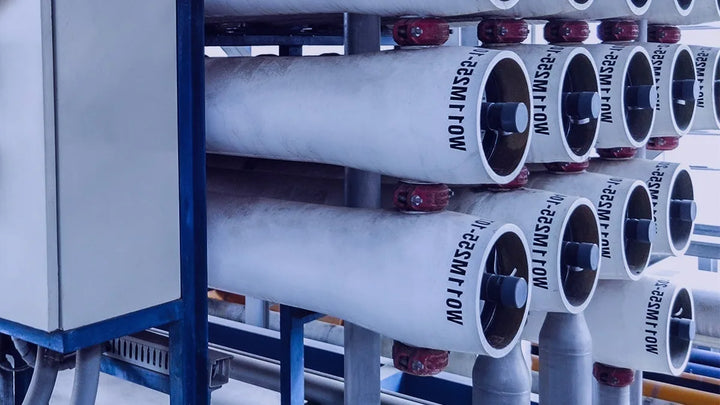
What a reverse osmosis membrane is, and what it holds back.
Read the guide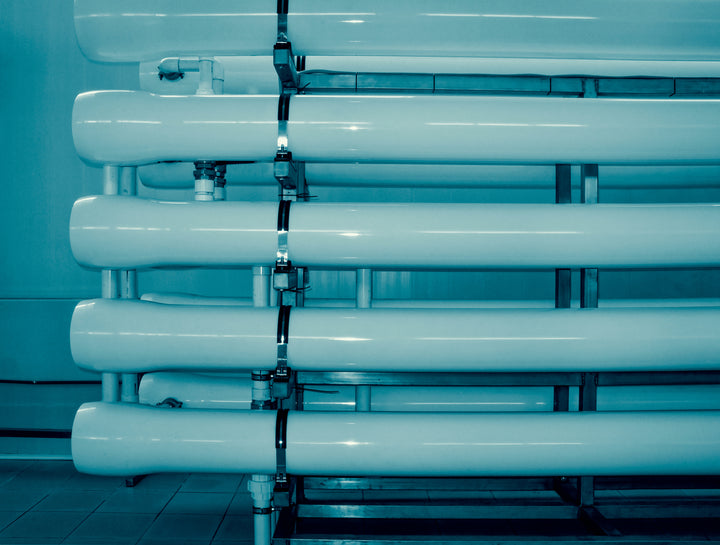
How reverse osmosis membranes handle PFAS, and what to look for in a system.
Read the guide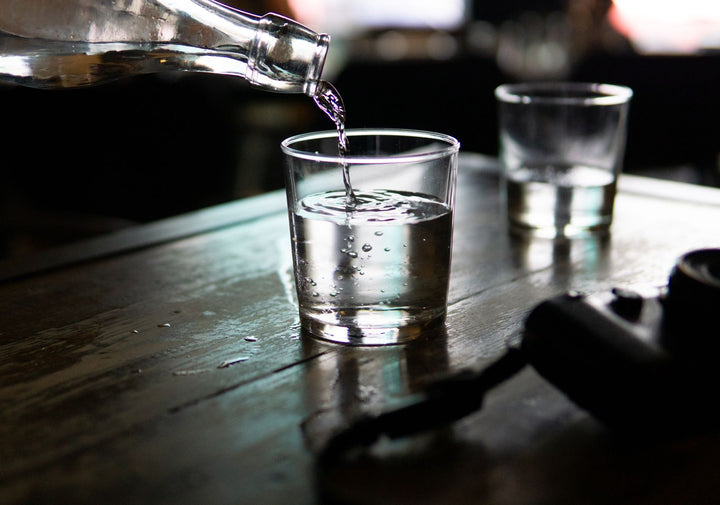
What the EPA's draft CCL 6 means for microplastics in drinking water.
Read the guide
Tell us about your water and how your home uses it. A specialist will recommend the system that fits, free.
Select one more to compare