


$32.78
Regular price $34.50
SKU CQE-RC-04033
Save $1.72 compared with one-time purchase
A pleated filter that catches sand, silt, rust and other particles before they reach the rest of your system, keeping your water clear and helping your other...
Read moreCouldn't load pickup availability
Overview
Clearer water. Longer life for every filter after it.
Sand, silt and rust ride in from the city main or your own well. This 5 micron pleated cartridge catches them first, before they reach the rest of your system.
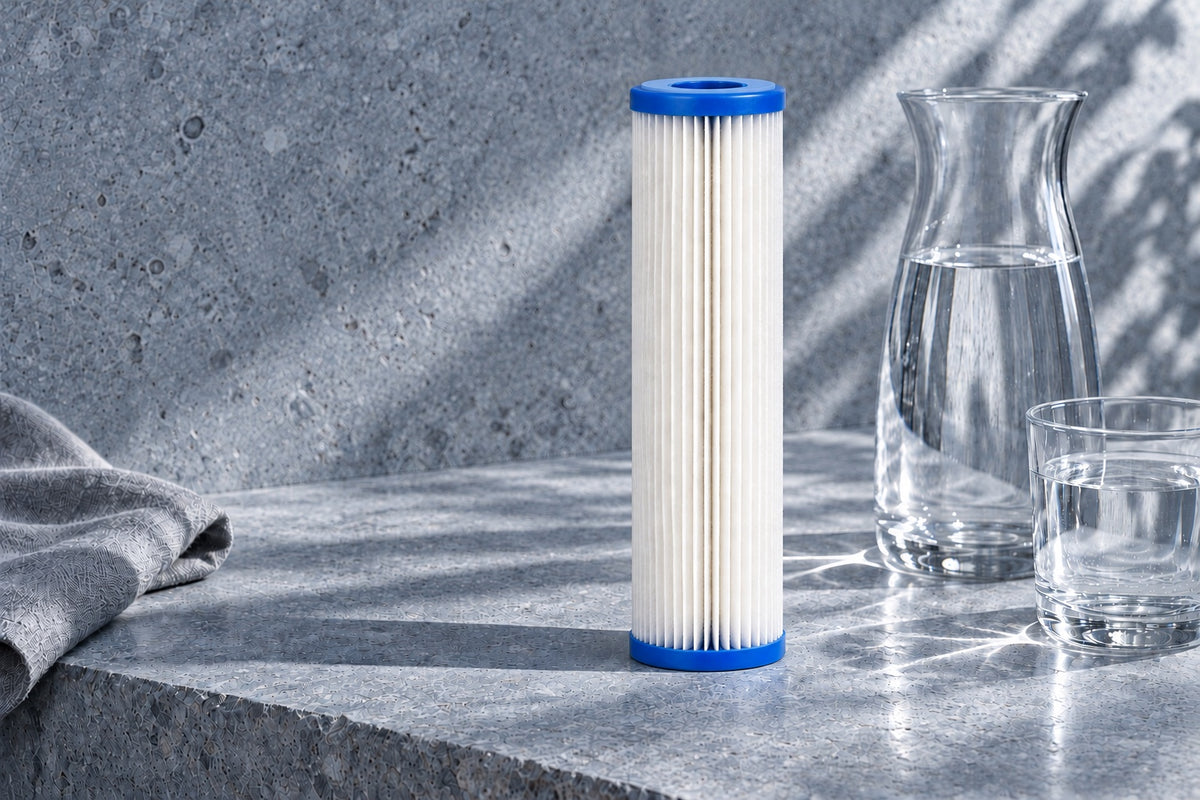
What it catches
Drag across to see how the pleats change as they work.
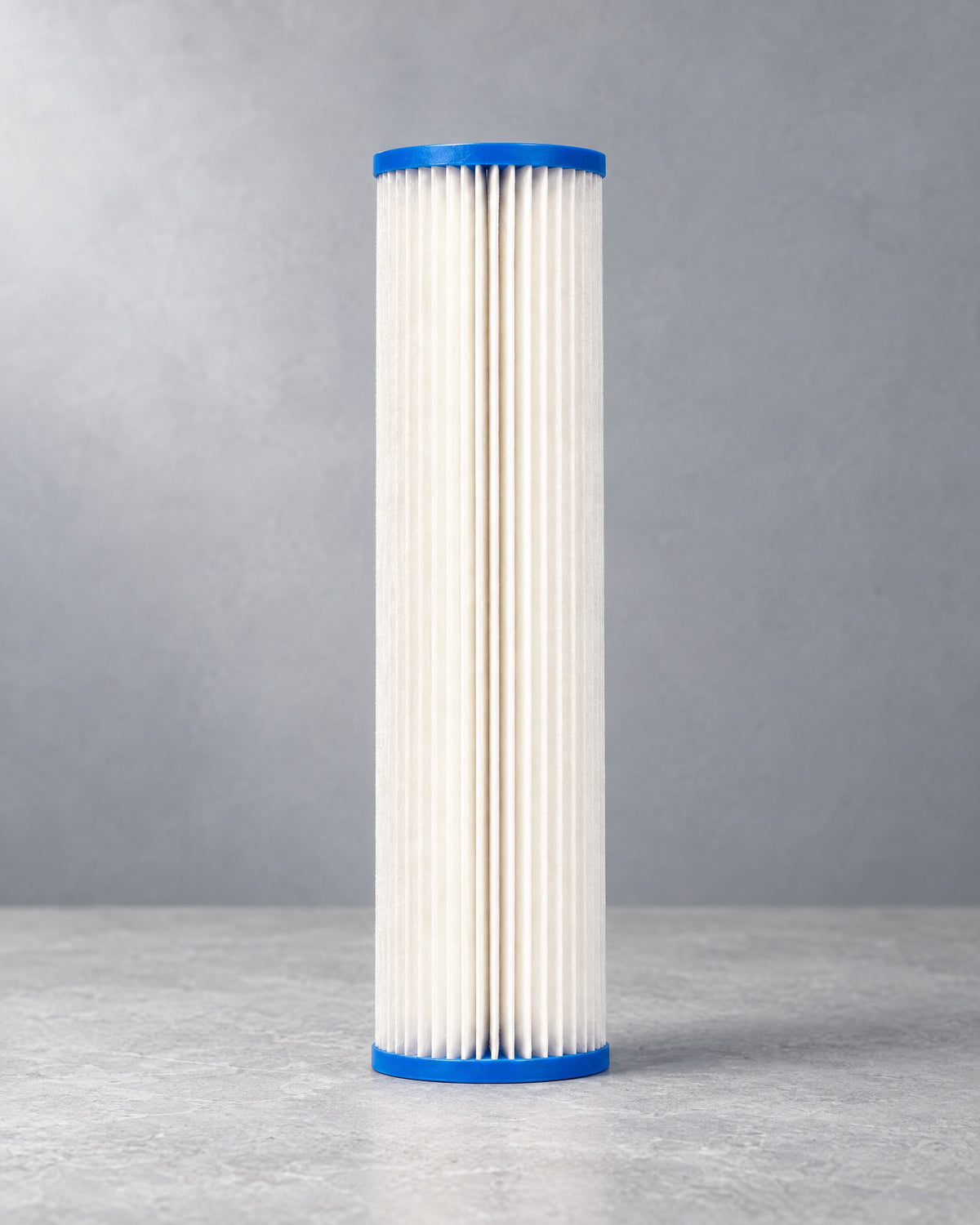

In service, the pleats darken with what they catch, a visible record of what stays out of your plumbing.

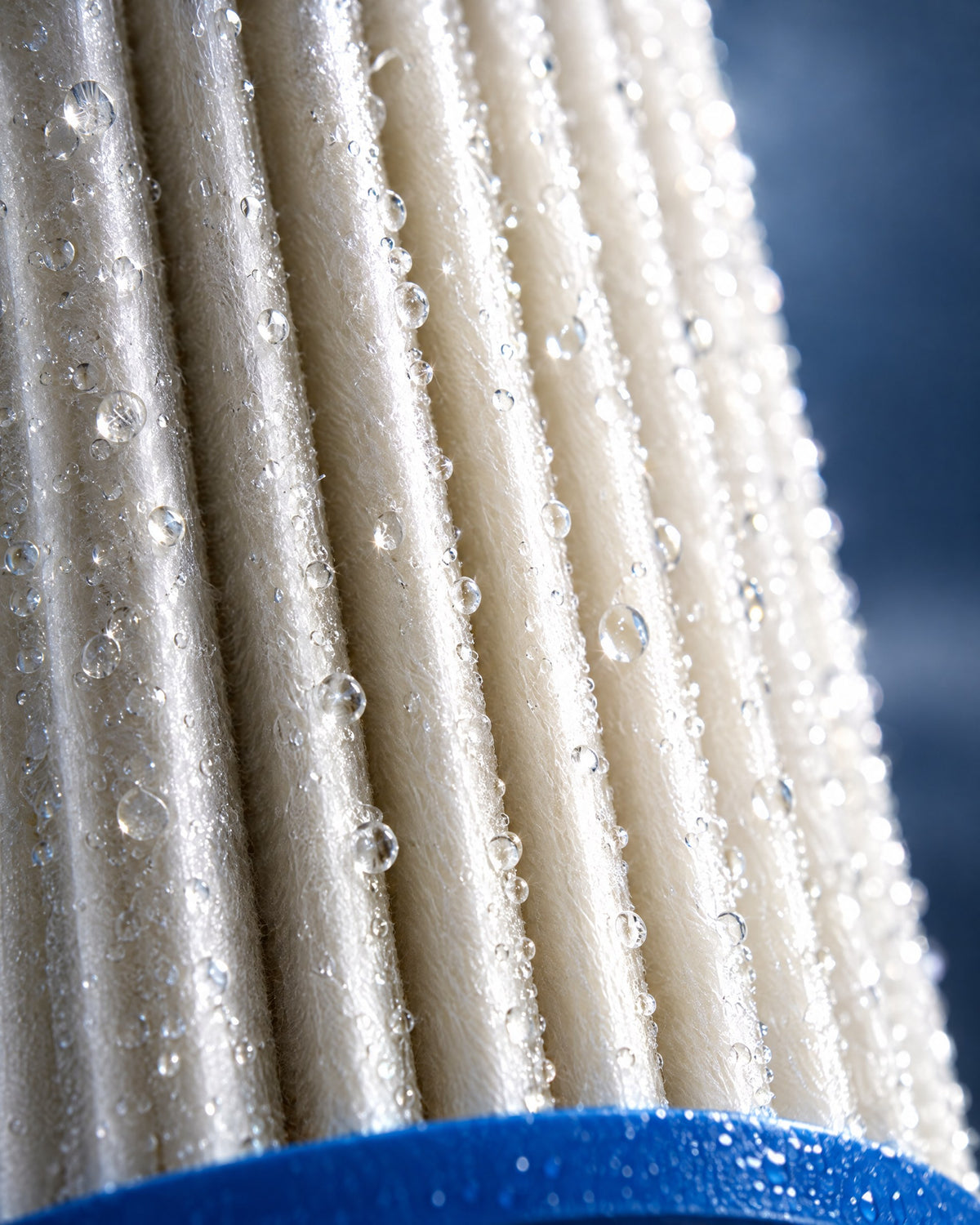

Simple, sealed and strong
Nothing is added to your water. It is built for one job: catching grit.
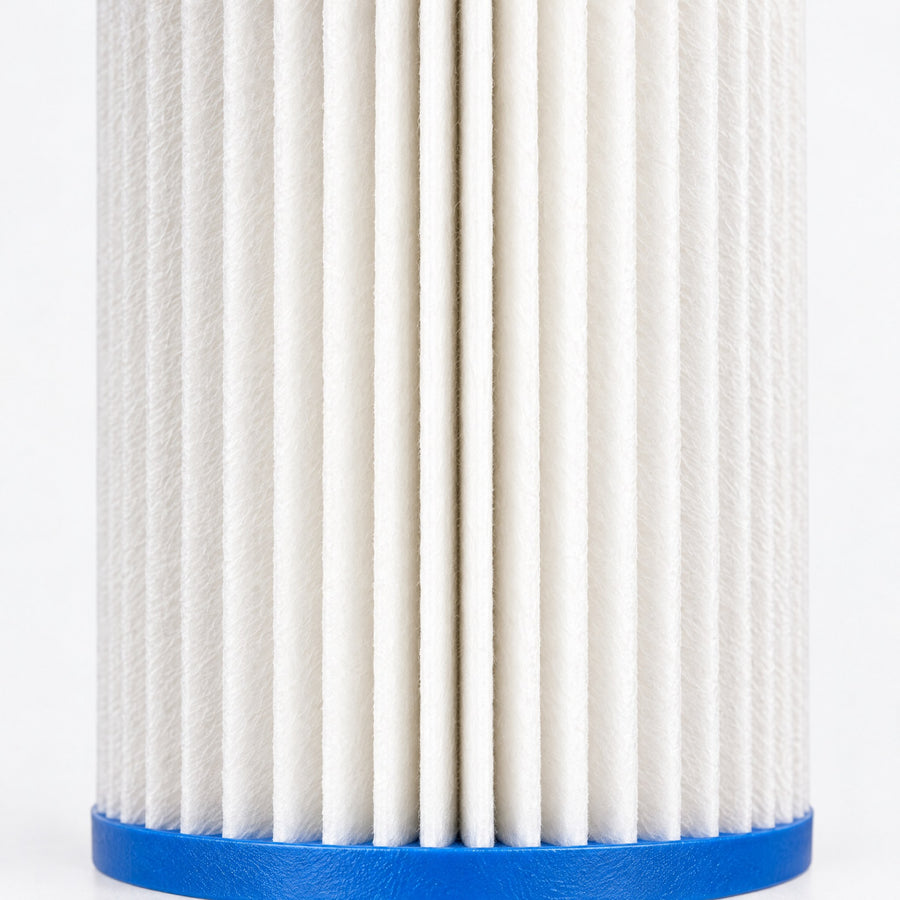
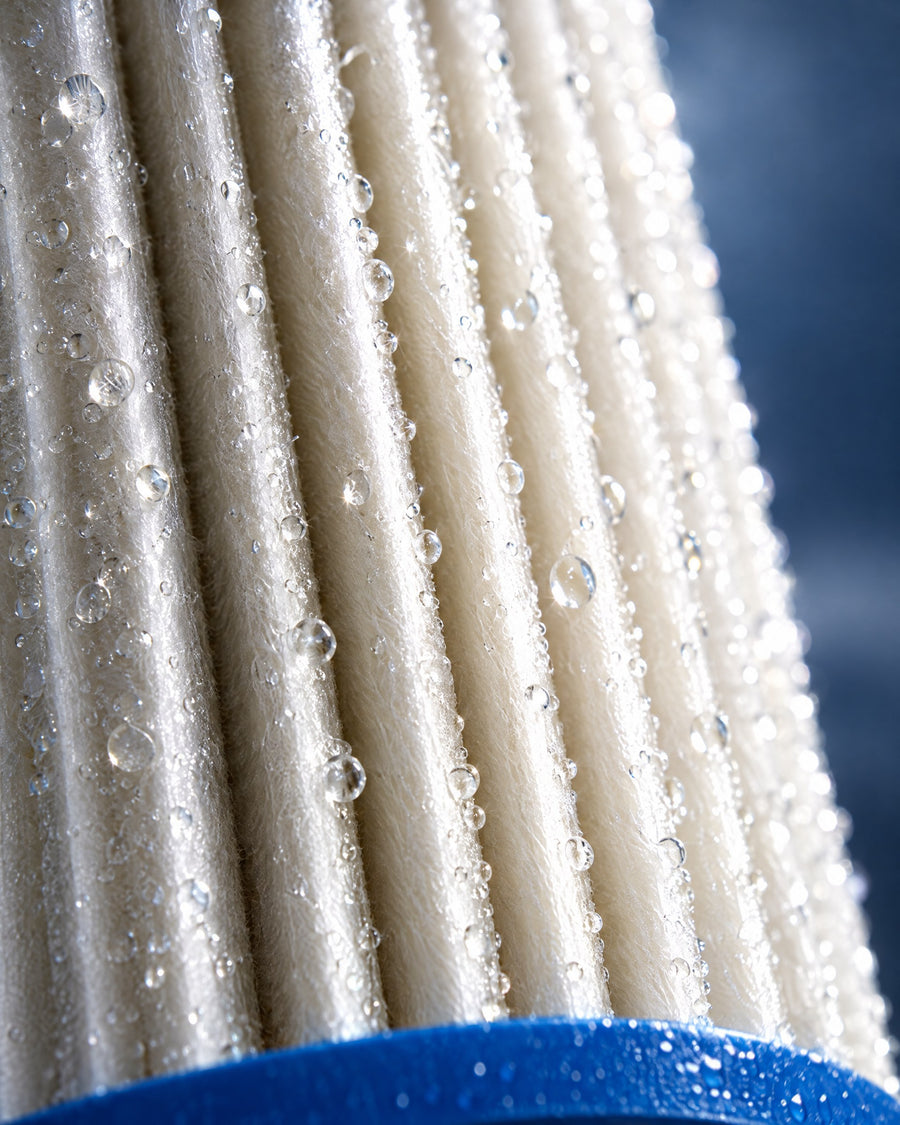
Pleated cellulose
More surface in every fold.
Deep, even folds of 5 micron media around a rigid polypropylene core.
Sealed ends
Sealed at both ends.
Vinyl plastisol caps bond to the media at both ends, so water goes through the pleats.
On the pleat tips
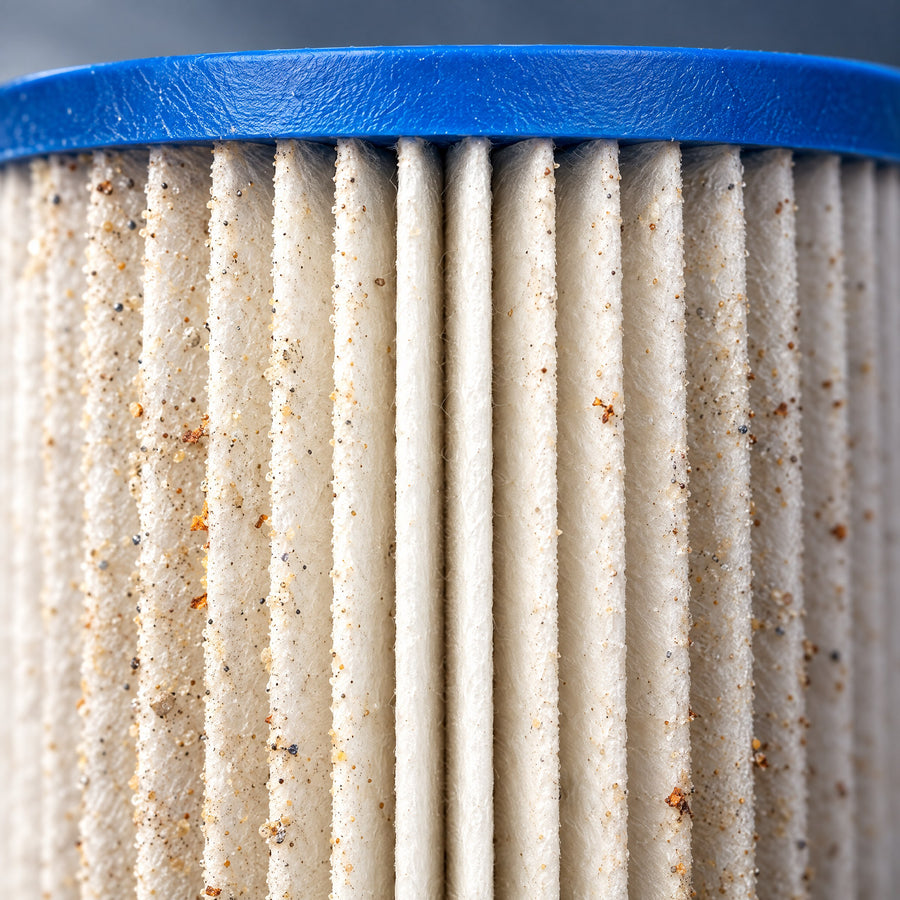
Grit stays where you can see it.
Grit gathers on the outer face while water moves on through the folds.
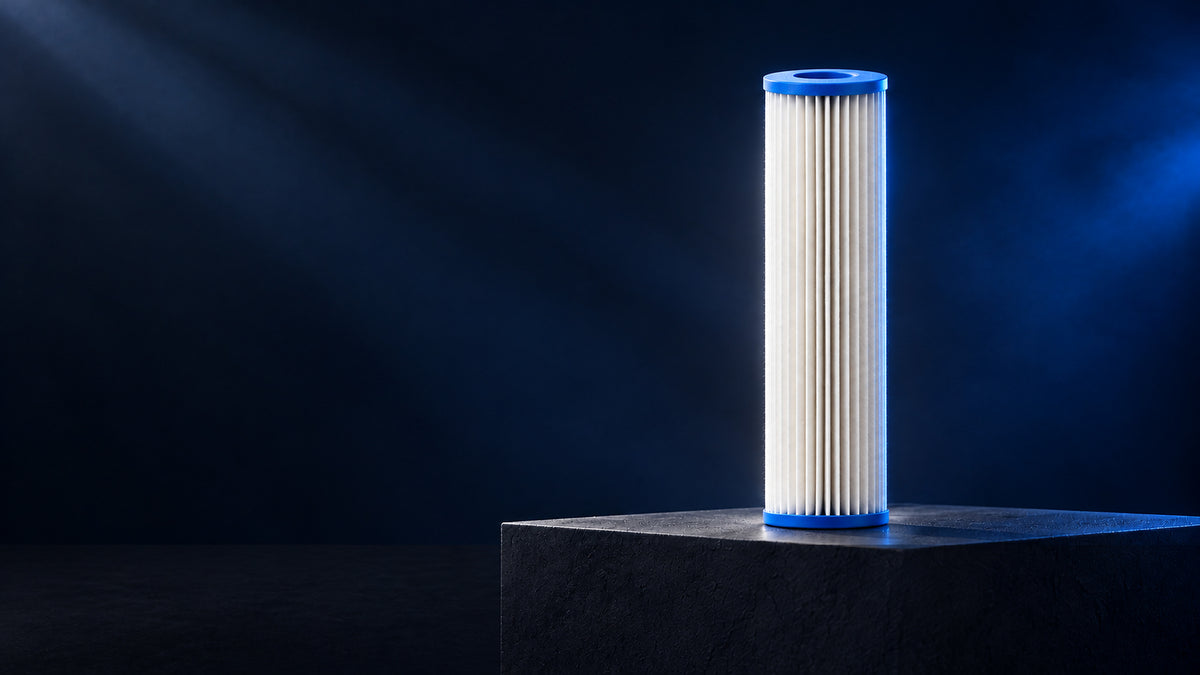
More folds, more surface, more grit held. Your water keeps its flow for longer.
What it reduces
Pick a concern and see how the pleats catch it, or which stage takes over.
Designed to reduce
Not designed to treat
Reduced by this cartridge
Sand
Sand is far coarser than the 5 micron rating, so it collects on the outer face of the pleats.
- Pleated cellulose, 5 micronactive
Method: Mechanical straining
The Pleated Cellulose Sediment Cartridge is best for
- The first stage of our standard triple cartridge systems, ahead of SMART Plus and the carbon block.
- The sediment pre-filter on whole house cartridge systems, and the first housing on whole house RO.
- City or well water that carries sand, silt, dirt or rust flakes.
- Homes where carbon or SMART cartridges clog before their time, or grit shows up in aerators, shower heads and toilet tanks.
- Any standard slim or Big Blue housing in one of the four sizes, ours or another brand's.
It is not the right fit for
- Anything dissolved. Chlorine, VOCs, pesticides, dissolved iron and lead, nitrate, fluoride and hardness pass straight through. Follow it with SMART, a carbon block, a specialty cartridge, a softener or reverse osmosis.
- Bacteria and viruses. Straining is not disinfection. Use dedicated treatment such as UV.
- A very heavy sand load on its own. Put a coarser stage in front of it, or use a larger Big Blue housing, so it does not load up in weeks.
- Chlorine taste or smell. Nothing is added and nothing chemical happens. A SMART or carbon stage after it handles chlorine.

The grit stops here.
On a whole house system, that means less grit settling into your aerators, shower heads, toilet tanks and valves.
Fit and care
Read the size off your old cartridge and tap its match. It lands straight in the buy box.
Actual cartridge diameter x length, in inches. See the price and add to cart
A quick swap, a long run
It takes a few minutes, and the full walkthrough is under Maintenance and care.
Shut off
Turn off the water, ease out the pressure and unscrew the sump.
Swap
Wash the sump with mild soap, check its O-ring and center the fresh cartridge.
Restore
Refit the sump without overtightening, bring the water back slowly, check for leaks and flush before use.
Why Crystal Quest
It looks after every filter that follows. Here is why to get it from us.
The one we choose
Our triple cartridge, whole house and whole house RO systems rely on this exact cartridge for their sediment stage.
No lock-in
Standard shells for standard housings. Buy from us because you want to, not because you have to.
Usually ships today
In-stock orders typically leave the same business day, and a filtration specialist is one call away if you are unsure of the size.
Over 1,000,000 people served. We build under ISO 9001 certified quality management. Questions about fit or returns? A filtration specialist answers by phone, email or chat. Read the refund policy
Description
Grit in the aerator. Sand in the toilet tank. A carbon or SMART cartridge that clogs long before its time. Dirt, rust and silt do more than cloud your water: they bury the expensive stages downstream. A sediment filter's job is to catch them first.
This 5-micron pleated sediment cartridge does that job with a large surface of pleated cellulose media wrapped around a polypropylene core. It is the first stage in Crystal Quest triple cartridge systems and the sediment pre-filter on whole house and whole house reverse osmosis systems, protecting the SMART, carbon and membrane stages that follow. Four sizes fit countertop, under-sink, whole house and Big Blue housings.
At a glance
- 5-micron rating: catches sand, silt, rust and other suspended particles
- Pleated for capacity: folding the media multiplies its surface area, so it holds more dirt before flow drops
- Protects what comes next: keeps sediment off SMART, carbon block and RO membrane stages
- Strong build: polypropylene core, vinyl plastisol end caps sealed to the media
- Four sizes with a typical life of 12 to 24 months
What you are looking at
The cartridge is built around deep, evenly spaced pleats. The pleated cellulose media wraps a rigid polypropylene core, polyethylene netting holds the pleats in place, and both ends are sealed in vinyl plastisol so water cannot bypass the media. As the cartridge works, the pleats darken with what they catch, a visible record of what stayed out of your system.
How a pleated sediment filter works
Mechanical filtration by size
Sediment filtration is straining. Water passes through the cellulose media and particles larger than its 5-micron rating are trapped. Nothing is added to the water and nothing chemical happens; the cartridge simply holds back what is too big to pass.
Why pleats beat a plain wrap
Folding the media into pleats packs far more filter surface into the same cartridge. More surface means water moves through the media more slowly at any given point, which keeps the pressure drop low and spreads the dirt over a larger area. The result is strong flow and a long run before the cartridge loads up.
Surface loading you can see
Pleated media catches most dirt on its outer face, where you can see it. That makes it easy to judge how hard your water is working the filter and to adjust your change schedule if your sediment load is heavy.
Why a pre-filter pays for itself
Carbon, SMART media and RO membranes are built to treat chemistry, not to strain mud. Every particle the sediment stage stops is one that cannot clog their pores or coat their surface, so a fresh sediment cartridge helps every downstream stage reach its full life.
What it reduces
Primary targets:
- Sediment: sand, silt, dirt and rust particles
- Other suspended particles down to 5 microns
Not designed to treat: anything dissolved. Chlorine, VOCs, dissolved metals such as iron and lead, nitrate, pesticides, fluoride and hardness pass through, as do bacteria and viruses. For those, the stages that follow it do the work: the SMART Filter Cartridge, the Coconut Based 5-Micron Carbon Block Filter Cartridge, specialty cartridges and reverse osmosis.
Why Crystal Quest
- The sediment stage our own systems specify. Crystal Quest's system manuals list this pleated cartridge as their standard sediment stage.
- Built to stay sealed. Vinyl plastisol end caps bond to the media so water cannot sneak around the pleats.
- Over 1,000,000 people served since 1994. Crystal Quest builds under ISO 9001 quality management and has made water filtration in the USA for over 30 years.
- Lifetime support. Call, email or chat with our water filtration team whenever you have a question.
Where it fits
- Triple cartridge systems: first stage, ahead of SMART Plus and the carbon block
- Whole house RO pre-filtration: first housing, ahead of SMART Plus
- Whole house cartridge systems: the sediment pre-filter
- Sizes by system: 2-7/8" x 9-3/4" (CQE-RC-04001) for countertop and under-sink systems; 2-7/8" x 20" (CQE-RC-04015) for whole house cartridge housings; 4-5/8" x 9-3/4" (CQE-RC-04033) and 4-5/8" x 20" (CQE-RC-04034) for larger compact, whole house and whole house RO housings
Choosing the right sediment filter
A sediment filter is the cheapest part of a water system and the one that protects all the expensive parts. Choosing one comes down to two things: the size your housing takes and how fine it filters.
What size sediment filter do I need?
Read the size on your current cartridge or measure it: width across, then length. Housings are named by nominal sizes, 2.5 x 10 and 2.5 x 20 inches for slim housings, 4.5 x 10 and 4.5 x 20 inches for Big Blue housings, and the cartridges that fit them measure 2-7/8 or 4-5/8 inches across and 9-3/4 or 20 inches long. This cartridge comes in all four.
Because the design is industry compatible, they fit standard housings whoever made them, not only Crystal Quest systems. The Compatibility tab lists our systems and other brands' housings that take each size.
What micron filter is best for well water?
For most homes, 5 micron is the right all-round sediment stage: fine enough to stop the sand, silt and rust that cloud water and clog carbon, SMART and RO stages, and open enough to keep your flow strong. If your well carries a lot of sand, put a coarser stage in front of it so this one does not load up in weeks.
What does a 5 micron filter remove?
Particles you could see or feel: sand, silt, dirt, rust flakes and pipe scale, down to 5 microns, which is far finer than a human hair. It does not change anything dissolved in the water, so chlorine, hardness, metals and nitrate pass straight through to the stages that treat them.
Common questions
What is the filter media?
Pleated cellulose media wrapped around a polypropylene core for strength. The ends are sealed in vinyl plastisol, and the cartridge is rated at 5 microns.
Why choose a pleated sediment filter?
The pleats give the media a large surface area, which maximizes dirt-holding capacity and keeps flow strong at a 5-micron rating.
Pleated or spun polypropylene: what is the difference?
Pleated cartridges catch dirt mostly on a large folded surface. Spun polypropylene cartridges trap dirt through the depth of a thick fiber wrap. Crystal Quest systems specify the pleated cellulose cartridge as their standard sediment stage.
Does it treat dissolved contaminants?
No. It filters suspended particles only. Dissolved metals, nitrate or pesticides need a carbon, SMART or specialty stage.
How often should I replace a sediment filter?
Typically 12 to 24 months, about 18 months for most homes. Replace sooner if taste, odor, flow or pressure changes. Actual life depends on feed water quality, system configuration and usage.
Which size fits my housing?
Use the actual diameter and length on your current cartridge: 2-7/8" x 9-3/4", 2-7/8" x 20", 4-5/8" x 9-3/4" or 4-5/8" x 20". These fit 2.5" x 10", 2.5" x 20", 5" x 10" Big Blue and 5" x 20" Big Blue housings.
Specifications
- Cartridge type
- Pleated sediment cartridge
- Format
- Drop-in replacement cartridge
- Micron rating
- 5 micron
- Media
- Pleated cellulose on a polypropylene core
- End caps
- Vinyl plastisol
- Netting
- Polyethylene
- Temperature rating
- 40 to 145 F (4.4 to 62.8 C)
- Typical replacement
- 12 to 24 months, about 18 months for most homes
Sizes and part numbers
| Size | Part numbers |
|---|---|
| 2-7/8” x 9-3/4” | CQE-RC-04001 |
| 2-7/8” x 20” | CQE-RC-04015 |
| 4-5/8" x 9-3/4" | CQE-RC-04033 |
| 4-5/8" x 20" | CQE-RC-04034 |
Dimensions are actual cartridge diameter x length in inches; nominal housing names are not cartridge measurements.
Replace sooner if taste, odor, flow or pressure changes. Actual life depends on feed water quality, system configuration and usage.
Compatibility

Industry-compatible design
Every size is measured on the cartridge itself and fits standard housings of its size, ours or another brand's.
Sizes and the housings they fit
| Cartridge (actual) | Housing |
|---|---|
| 2-7/8" x 9-3/4" | 2.5 x 10 inch slim housing |
| 2-7/8" x 20" | 2.5 x 20 inch slim housing |
| 4-5/8" x 9-3/4" | 4.5 x 10 inch Big Blue housing |
| 4-5/8" x 20" | 4.5 x 20 inch Big Blue housing |
Other brands it fits
- Pentair Pentek Standard #10 housings2.5 x 10 slim housingTakes the 2-7/8" x 9-3/4" size
- Pentair Pentek Standard #20 housings2.5 x 20 slim housingTakes the 2-7/8" x 20" size
- Pentair Pentek Big Blue #10 housings4.5 x 10 Big Blue housingTakes the 4-5/8" x 9-3/4" size
- Pentair Pentek Big Blue #20 housings4.5 x 20 Big Blue housingTakes the 4-5/8" x 20" size
- iSpring RCC7 and RCC7PUnder-sink RO system, sediment stageTakes the 2-7/8" x 9-3/4" size
- APEC Water ROES-50Under-sink RO system, sediment stageTakes the 2-7/8" x 9-3/4" size
- Express Water standard 10" RO housing2.5 x 10 RO pre-filter housingTakes the 2-7/8" x 9-3/4" size
- iSpring WGB21BWhole house system, sediment stageTakes the 4-5/8" x 9-3/4" size
- Express Water WH250SCSWhole house system, sediment stageTakes the 4-5/8" x 9-3/4" size
- iSpring WGB22B and WGB32BWhole house systems, sediment stageTakes the 4-5/8" x 20" size
- Express Water 4.5" x 20" whole house housingSingle Big Blue housingTakes the 4-5/8" x 20" size
Brand names in this section belong to their owners and are used only to show fit. Crystal Quest is not affiliated with them.
Crystal Quest systems that use the Pleated Cellulose Sediment Cartridge
2-7/8" x 9-3/4"


2-7/8" x 20"


4-5/8" x 9-3/4"


Maintenance & care
When to change it
How often should you change a sediment filter?
Typically every 12 to 24 months, about 18 months for most homes. Change it sooner if the water pressure or flow drops, or if the pleats are dark with dirt. On a housing with pressure gauges, change it when the difference between inlet and outlet has grown well beyond what it read with a fresh cartridge.
How to tell it is clogged
- Weaker flow at the taps or a shower that never quite gets going.
- A bigger pressure difference between the gauges before and after the housing.
- Dark pleats. Pleated media catches dirt on its outer face, so you can see how hard your water is working it.
Changing it in five minutes
Turn off the water, release the pressure, unscrew the sump with its wrench and swap the cartridge. While the sump is off, rinse it with mild soap and water and check that the O-ring sits fully in its groove; a dry or twisted O-ring is the usual cause of a drip afterward.
- Keep one spare on the shelf. Sediment loads can jump after plumbing work, a main break or heavy rain on a well.
- Change it with the stages after it. In a multi-stage system, a fresh sediment cartridge helps the carbon, SMART or membrane stage reach its full life.
Troubleshooting
The housing drips after a change
Unscrew the sump, reseat the O-ring in its groove and hand-tighten the sump with the wrench without cross-threading or overtightening. Replace the O-ring if it is flattened or cracked.
The cartridge clogs within weeks
Your water carries more sediment than one 5 micron stage should handle. A coarser filter ahead of it, or a larger 4.5 inch Big Blue housing, spreads the load. Call us and we will size it with you.


